Lions Campus
What is Gaming Addiction?
Gaming addiction is a complex behavioural health condition increasingly affecting adolescents and young adults. While gaming can provide enjoyment, creativity, and social connection, for some it develops into an unhealthy dependency that begins to control daily life. When the urge to play overrides responsibilities, relationships, or wellbeing, gaming shifts from a pastime into a disruptive disorder.
The causes of gaming addiction are often complex and usually involve more than one factor. For some young people, gaming becomes a quick escape from problems like stress at school, bullying, or family conflict. For others, it fills deeper needs, such as coping with low self-esteem, loneliness, or a lack of belonging. Modern games are also designed to keep players engaged with rewards, achievements, and constant interaction, which makes it even harder to stop.
At Lions Campus, our programmes go far beyond simply cutting back screen time. We focus on understanding why gaming feels so important and helping young people find healthier ways to manage their emotions. Our gaming addiction support programmes address the emotional and social aspects of gaming addiction with compassion.
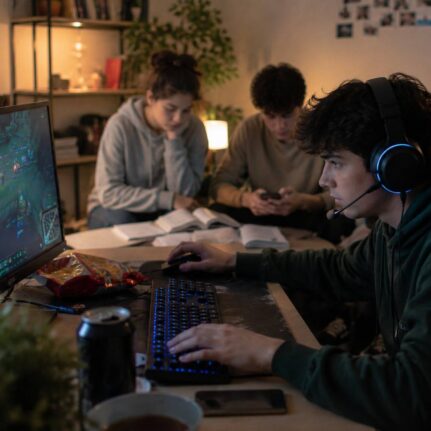
Clinically, gaming addiction is seen as a behavioural disorder where gaming continues despite negative effects. It is marked by a loss of control, constant thoughts about gaming, and emotional distress when not playing. In teenagers, this often shows up as poor grades, late-night gaming and sleep problems, withdrawal from family and friends, and a loss of interest in other activities.