Illustration of a residential townhouse in central London
Two happy teenagers in common room

Residential Support for Young People Aged 16–25

At our Marylebone home, young people find structure, community, and therapeutic support built into everyday life.

Our Residential Programme brings group work, one-to-one support, and shared experiences together – helping young people find their footing and build greater independence.

"After years of weekly therapy and failed programmes, Lions Campus gave my daughter the balance of structure and compassion she needed. The focus on community and confidence changed everything. She’s eating well and thriving again."

Father sharing a testimonial about his teen support programme
Mark T. - Cheshire (Eating Disorder, ASD)

“Lions Campus understood my son in a way no one else had. They created calm, predictability, and purpose — and slowly, his spark returned. He’s now engaging, motivated, and looking forward to going to university.”

Mother sharing a positive testimonial about a teen development programme
Claire T. - Geneva, Switzerland (ASD, Depression, Substance Use)

"My teenager’s world had shrunk to a screen. Lions Campus helped them reconnect with real life friends, exercise, and family. They’ve rediscovered joy in everyday things, and I couldn’t be more grateful."

Father giving a positive recommendation for a teen development programme
David K. - Dubai, UAE (Compulsive Gaming)

"When I first came to Lions Campus, I didn’t think anyone could help me. The team actually listened, no judgment, no pressure. I learned how to cope and trust people again. For the first time, I felt understood. The staff gave me structure without making me feel controlled, and that changed everything. I’ve made real friends here with people who get me and that I will always have."

Happy teenager in a classroom. She has short cropped hair and wears a beige cashmere jumper.
Ottilie S. - London, UK (Borderline Personality Disorder, Self-Harm)
Teenagers playing a game together in a park
Young adults cooking together as part of a life skills programme

Living at Lions Campus

When Everyday Life Needs More Support

As a parent, you may have arranged appointments, navigated school or university concerns, or sought professional advice, and still find that ordinary life feels difficult for your young person. Some young people come to us following more intensive treatment; others need greater consistency around them while they work towards stability and independence.

Residential support creates space to practise the things that aren’t always easy to do alone: getting through a morning, being part of a group, managing difficult conversations, and gradually taking more responsibility for everyday life.

We’ll explore whether our Residential Programme is appropriate for your young person. For those who can continue living at home or independently, our Day Programme may offer another way forward.

Our Residential Programme begins with a minimum 12-week stay. Support is shaped around each young person’s needs and goals.

Two teenagers cycling through a park in London

Enquire Now

What We Offer


Integrated Support
for Lasting Change

Life at Lions Campus brings together therapeutic work, community, and the responsibilities of everyday living. Each element has a purpose, giving young people opportunities to put what they’re learning into practice beyond individual sessions.

  • Group Work & Peer Connection


    Facilitated groups create opportunities to explore experiences, develop self-awareness, and practise communicating with others. Just as important is what happens between sessions: friendships, shared activities, and learning how to be part of a community.

  • One-to-One Support & Case Management

    Teenager in a one-to-one session with a case manager

    A dedicated case manager helps each resident set meaningful goals, review progress, and navigate their programme. We can also help coordinate appropriate external therapists, psychiatrists, and other specialists when additional clinical expertise is needed.

  • Life Skills & Everyday Responsibilities

    Teenagers participating in a life skills workshop together

    Confidence grows through doing. From managing money and keeping appointments to preparing meals and organising the week – practical activities give young people opportunities to make decisions, solve problems, and become more self-reliant.

  • Education & Future Planning

    Teenager in a one-to-one session at a table

    For some residents, staying connected to school, sixth form, or university is important. We can coordinate with existing education providers or explore bespoke support through our sister company, Lionheart Education, while helping young people consider their next steps.

  • Shared Meals
    & Nutrition

    Young people learning to cook together in a life skills workshop

    Fresh meals prepared by our in-house chef bring everyone together around the table. Cooking and baking activities also help young people develop practical skills, participate in daily routines, and grow more confident in the kitchen.

  • Movement,
    Yoga & Wellbeing

    Teenagers taking part in a yoga and mindfulness session together

    Yoga and movement-based activities offer opportunities to be active, explore ways of managing stress, and find moments of focus throughout the day. These activities sit alongside therapeutic work, practical responsibilities, and time spent with others.

From Morning to Evening

A Typical Day at Lions Campus

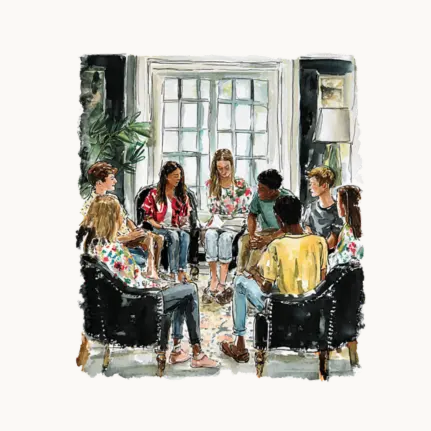
Teenagers sitting together in a daily group discussion

Daily Reflection

A chance to notice how things are feeling and begin the day with intention. Some mornings are easier than others; both belong here.

Adolescents sitting together in a group programme processing emotions

Process Group

A facilitated group where young people explore experiences, listen to others, and practise putting their thoughts into words.

Teenager in a one-to-one session with a case manager

Goals Group

Goals become manageable when broken into steps. This is a time to consider what matters now, and identify something practical to work towards.

Teenagers participating in a life skills and personal development workshop

Life Skills Workshop

Cooking, budgeting, planning, and everyday problem-solving. These workshops make independence something young people can practise, discuss, and learn from.

Teenagers and young adults sitting together and eating lunch

Lunch

A chance to eat together, catch up, and take a break. Shared moments like these help Lions Campus feel like a community and a home.

Teenagers taking part in a yoga and mindfulness session together

Yoga

Guided movement and breathing offer young people a different way to check in with themselves. Here, we create space to stretch, focus, and find a calm moment.

Teenager sitting in a chair during a one-to-one session

1-1 Session

Private time for the young person with their case manager. Time to talk about what’s going well, what’s difficult, and what adjustments might be useful.

Teenagers participating in a life skills and personal development group

Psychoeducation

Exploring mental health, coping strategies, and behavioural patterns, helping young people understand their experiences and consider new ways of responding to difficult situations.

Teenager sitting in a chair writing in a notebook

Daily Inventory

A moment to look back at the day without needing to judge every moment. What went well? What felt harder? What might be worth trying differently tomorrow?

Teenagers sitting together and eating

Supper

Dinner brings everyone back around the table. This is a time to unwind, catch up, and enjoy being part of the Lions Campus community.

Teenagers enjoying social time together in london

Social Time

We typically end the day by spending time with peers, seeing family where arranged, studying, enjoying personal interests, or attending appropriate support meetings.

09:15-09:30AM
10:00-10:45AM
11:00-11:45AM
12:00-13:00PM
13:00-14:00PM
14:00-15:00
15:00-16:00PM
16:00-17:00PM
17:00-17:30PM
18:00-18:30PM
19:00-21:00PM
Parents and young adult child speaking with a professional

How It Works


Designed for Individual Needs

  • Your Initial Conversation

    We begin with a confidential conversation about what’s happening, what support has already been tried, and what your family hopes might change. There’s space to ask questions, too.

  • Getting to Know the Young Person

    We invite the young person to speak directly with our team, share their perspective, and discuss any concerns. Building trust starts before they arrive.

  • Understanding Their Needs

    Our intake assessment explores the young person’s circumstances, existing support, and individual goals – helping us understand whether Residential is suitable and what they may need around them.

  • Planning Their Programme

    We develop a personalised plan incorporating group work, individual support, everyday structure, and relevant external input. Existing commitments – including education, where appropriate – are also considered.

  • Meeting Their Case Manager

    Each resident is introduced to their dedicated case manager, who helps coordinate the programme, review goals, and establish clear lines of communication.

  • Settling Into Life at Lions Campus

    Arriving somewhere new can feel like a big step. We help young people get to know the home, meet the team, and find their place in the daily routines.

Structured and Personalised

Support That Grows With Them

Once a young person is living at Lions Campus, we take the time to learn what helps them participate, what they’re finding difficult, and where they’re beginning to manage more independently.

Some goals are practical: keeping appointments, managing money, or reconnecting with education. Others concern relationships, emotional development, or finding their place in a group. With guidance from their case manager, residents can review their goals and adjust their focus over time. Where appropriate, we also involve families and external professionals, so the different elements of support remain connected as a young person’s needs evolve.

We’re Here to Help

Living at Lions Campus | FAQs

  • Who is the Residential Programme best suited for?

    Our Residential Programme supports young people of all genders aged 16–25 who may benefit from a more consistent environment around mental health, recovery, and everyday life.

    This might follow a period of more intensive treatment, or come at a point when existing arrangements aren’t providing enough structure. We assess suitability individually to understand what support is appropriate. Lions Campus is not an emergency or inpatient psychiatric service.

  • What conditions and challenges do you support?

    We support young people aged 16–25 experiencing a wide range of difficulties, including anxiety, depression, trauma, eating disorders including anorexia and bulimia, substance addiction, and behavioural or co-occurring difficulties. Where specialist or additional clinical treatment is needed, we can slot in alongside appropriate external professionals.

  • How long do residents stay, and how many young people live at Lions Campus?

    Our minimum residential programme is 12 weeks. Some young people decide to stay with us for longer, depending on their circumstances, progress, and goals. Our Marylebone residence accommodates up to 12 young people. This creates a smaller, more focused, age-specific community.

  • How does clinical support work alongside the Residential Programme?

    Our programme includes group work, individual support, and case management. Where specialist clinical expertise is needed, we can work alongside an existing team or help families connect with appropriate external psychiatrists, therapists, and other professionals.

    Lions Campus is not CQC-registered and does not provide regulated medical, nursing or personal care. Where helpful, we can arrange or coordinate external assessments, therapy and specialist input.

  • How do you balance safety and independence?

    Living in central London creates opportunities for young people to develop confidence, build independence, and participate in everyday life. Naturally, families want reassurance about the safety of their young person.

    As part of admissions, we discuss each resident’s needs, the boundaries and supervision appropriate to them, and arrangements for spending time outside the residence. Our team can explain the safeguarding procedures in place and how concerns are handled, so you’ll understand how safety and independence are managed together.

  • Can my young person continue school or university?

    Yes – where appropriate, education can continue. Some residents remain in their existing school, sixth form, or university; others may benefit from bespoke educational support through Lionheart Education or another provider.

    We’re mindful that, for some young people, studying isn’t the immediate priority. We explore what’s realistic and useful as part of their personalised programme.

  • How involved are families during the programme?

    Family relationships are often an important part of a young person’s progress. We’ll discuss appropriate communication and involvement during the admissions process, taking account of each resident’s age, preferences, and confidentiality. Our team can also explain the practical arrangements for living at Lions Campus, including the support available throughout the day and overnight.

  • What happens after the Residential Programme?

    Residential support is designed to help young people develop skills, routines and confidence they can carry into everyday life. As their programme progresses, we consider what support may be useful next – whether that means returning home, continuing education, living more independently or exploring ongoing support through our Day Programme. The next steps are shaped around the individual’s circumstances and goals.

Reach out Today

Where To Find Us

Our home is in Marylebone, central London, a short walk from Baker Street and Bond Street underground stations.