young man focused studying desk

The Lions Campus Approach

Screen Addiction

For many young people, screens have become more than a way to connect with friends or keep up with schoolwork — they have turned into an escape that can dominate daily life. Excessive time spent on phones, gaming consoles, or social media often leads to disrupted sleep, falling behind in education, strained family relationships, and a loss of interest in real-world experiences.

At Lions Campus, we provide specialist support for adolescents and young adults experiencing digital overuse. Our Screen Use Support Programme is designed to help young people step away from unhelpful online patterns, rebuild healthy boundaries, and rediscover balance in everyday life. Through structured support, coaching, and wellbeing-focused approaches, we guide each individual towards a healthier relationship with technology and a stronger sense of self.

Lions Campus

What is Screen Addiction?


Phones, tablets, gaming consoles, and social media are part of everyday life. But when a young person struggles to switch off, spends long hours online without control, or relies on screens to avoid real-life challenges, it may point to screen addiction.

Screen addiction isn’t only about time spent online — it’s about dependence. It becomes concerning when digital use takes priority over school, family, friendships, or sleep, and starts to control daily life. Many young people use screens to cope with stress, low self-esteem, loneliness, or difficult emotions. For those already facing challenges like anxiety, depression, ADHD, or trauma, the risk of forming an unhealthy attachment to screens can be even higher.

At Lions Campus, we focus on more than simply reducing screen time. Our programmes explore the underlying reasons behind digital overuse, helping young people recognise triggers and develop healthier ways of responding. By supporting both behaviour and underlying factors, we help them build balance and reconnect with life offline.


Arrange A Call
young man using phone indoors
hopeful conversation session

Lions Campus

Types of Screen Addiction

Our Screen Use Programmes are designed to support young people struggling with different types of digital overuse. These may include:

  •       Gaming Addiction: Spending long hours playing video games, often losing sleep and neglecting studies, friendships, or family time.
  •       Social Media Dependence: Constantly checking platforms, posting updates, or seeking approval through likes and comments.
  •       Streaming & Binge-Watching: Watching series, videos, or online content for extended periods, making it hard to focus on daily responsibilities.
  •       Online Browsing & Content Overload: Endless scrolling through news, memes, or videos without being able to stop.
  •       Multiscreen Use: Using several devices at once, leading to distraction, poor concentration, and reduced productivity.
  •       And Many More: Other forms of unhealthy digital behaviour, such as compulsive online shopping, gambling, or endless engagement with apps and more.

Screen addiction is often connected to other challenges such as anxiety, depression, low self-esteem, or sleep problems. These can influence one another and make balance harder to maintain if not addressed together.

Signs of Screens Addiction

Not all screen use is harmful but when devices begin to take over daily life, it can signal a deeper problem. Screen addiction shows up in different ways for each young person, often combining emotional strain, physical stress, and changes in behaviour. These signs reveal when technology use is no longer balanced and begins to control rather than support everyday living.

  • Emotional and mental signs:


    young man thoughtful phone conversation
    • Feeling uneasy, restless, or irritable when away from a device.
    • Constantly planning the next time to go online or play games.
    • Losing interest in face-to-face conversations or real-world activities.
    • Using digital platforms as the main way to cope with sadness, loneliness, or stress.
    • Experiencing low mood or frustration after long screen sessions.
  • Physical signs

    Candid blurry photograph of a consultant taking a call in a modern room
    • Poor sleep caused by late-night scrolling, gaming, or streaming.
    • Tired eyes, headaches, or neck and back pain from sitting too long.
    • Fatigue during the day, with little energy for school or hobbies.
    • Lack of physical movement leading to stiffness or low energy
    • Neglect of regular meals, exercise, or self-care.
  • Behavioural signs

    Woman using phone while driving
    • Ignoring schoolwork, responsibilities, or personal goals.
    • Pulling away from family, friends, or social events.
    • Spending large amounts of time alone in front of screens.
    • Hiding screen use or becoming defensive when asked about it.
    • Choosing digital activities over sports, creative projects, or outdoor play.

For young people, these signs can grow into wider challenges such as falling behind at school or losing connections with others. Over time, this pattern of digital overuse can also be linked with other emotional or behavioural challenges, making early support and guidance important.

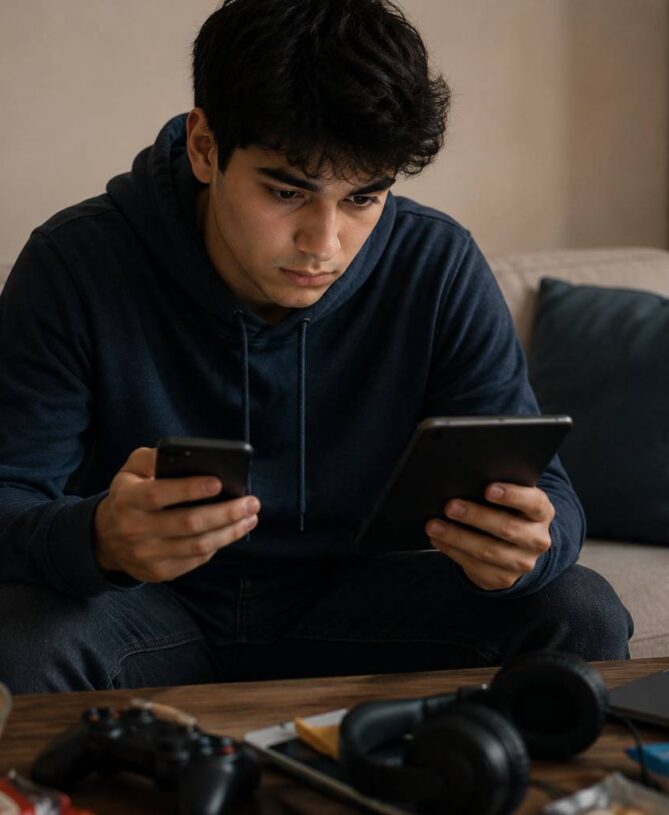
young man using multiple screens
teen counseling supportive conversation session

Our Programme

How We Help Young People Manage Screen Use


At Lions Campus, we know that digital overuse is not just about phones, games, or social media. It often reflects what a young person is looking for — whether that’s comfort, escape, or connection. That’s why every programme we create is personalised and designed around individual needs.

We start by listening and understanding how screens affect daily life, school, and relationships. From there, we build a daily routine that includes guidance, offline activities, and time to reflect. This helps young people improve focus, feel more confident, and reconnect with the world around them.

Our goal is not only to reduce screen time but to help young people develop healthier ways of responding, build stronger relationships, and create habits that bring balance back into their lives.

Adolescent one to one guidance
Supportive mentor conversation with teen

Our Approach

A Whole-Person Approach


At Lions Campus, we understand that digital overuse affects many areas of life — thoughts, emotions, physical wellbeing, and relationships. That’s why our approach focuses on the whole person, not just screen use.

We start with careful listening and assessment, uncovering what role screens play in their life and what struggles may sit beneath the surface. Based on this, we create a programme that involves daily structure, healthier routines, and opportunities for real-world connection, all aimed at restoring balance and independence.

Progress is monitored closely, and support is adapted as needs change. The aim is steady growth — helping young people replace compulsive screen habits with confidence, resilience, and healthier ways of managing stress and emotions.

young adults group discussion indoors
Group of friends supporting each other

Our Team

A Dedicated Team for Every Step


Every young person at Lions Campus is supported by a team that is both compassionate and experienced. Our team includes programme specialists,  educators, and mentors, all working together to provide consistent guidance.

One of the most valued parts of our Screen Addiction Support Programme is having live-in support staff, available to offer guidance and reassurance. We also work alongside external registered specialists where appropriate, ensuring each programme is shaped around individual needs.

Every interaction is built on trust, respect, and privacy — creating a structured and supportive environment where young people can build confidence and reconnect with everyday life.     

Support team group discussion
supportive conversation calm setting

Flexible Programmes for Screen Use


We at Lions Campus understand that no two journeys with screen addiction are the same. Each young person faces their own unique challenges. Our Screen Addiction Support Programmes are designed to address both reliance on screens and any underlying emotional or psychological factors that may come with it. Here are our programmes for

  • Residential Programme for Adolescents
  • Day Programme for Adolescents
  • Coaching and Mentorship

We focus on privacy, flexibility, and personalisation, ensuring each young person receives the right support. Our programmes help them build balance, confidence, and healthier routines both online and offline.

Spotlight on Screen Addiction

Discover our guidance and resources to better understand screen addiction, its impact on young people, and ways families can support positive change.


Young adult reading at home

Arrange A Call

talking to young adult

FAQs About Screen Addiction

  • Who is most at risk of developing screen addiction?

    Adolescents and young adults are most vulnerable because of social pressure, gaming, and the role of digital platforms in school and friendships. However, anyone can develop unhealthy screen habits.

  • Is screen addiction the same as spending a lot of time online?

    No. Screen addiction is not about the number of hours but about dependency. It becomes a problem when digital use takes over daily life and feels impossible to cut back.


  • What happens during programme for screen addiction?

    Each programme is personalised and may include structured routines, one-to-one sessions, coaching, and guided activities to help young people build confidence and reconnect with everyday life.

  • How can screen use affect wellbeing?

    Excessive screen use can increase feelings of anxiety, depression, and reduced confidence. It may also lead to social withdrawal and make it harder to respond to stress in positive ways.

  • Can screen addiction affect relationships?

    Yes. Excessive time online can create distance from family and friends, reduce face-to-face interaction, and cause conflict over device use.

  • Is screen addiction permanent?

    No. With awareness, healthy routines, and support, most people can change their relationship with screens, set boundaries, and regain balance in daily life.

Person walking on road at sunrise

Start the Journey Today

Every small step toward change makes a difference. Helping a young person move away from unhealthy screen habits can open the door to better sleep, stronger relationships, and a brighter outlook on life. With consistent support and guidance, progress becomes not only possible but sustainable.

Don’t wait until screen use begins to take over daily life. Contact Lions Campus today to explore how our Screen Use Programmes can help your child build balance and thrive both online and offline.

Begin Your Journey