When someone you love has been struggling, helping them out can become a part of everyday life.
As a parent, it may be you who makes the appointment; sends the reminder; speaks to the school. Who checks they’ve eaten, rearranges plans, or steps in before one difficult thing becomes five.
Sometimes, that level of support is exactly what a young adult navigating a difficult time needs. As they begin to find their footing, however, parents may wonder: how much should I still be doing?
It’s a question we hear often. The young people we support are 16–25: already at a stage of life when responsibility starts shifting towards them. Mental health difficulties, addiction, eating disorders or periods of instability can interrupt that process.
“Independence grows through participation. Confidence grows from the opportunity to try.”
Here at Lions Campus, we do not see independence as the absence of support. We see it as something that can be developed gradually, with the right amount of structure, as a young person practices taking greater responsibility for their own life.
Support can change shape

Parents remain important well into emerging adulthood. A 2024 study of 680 young adults (aged 18–25) found that several supportive ways parents helped young adults manage stress (including helping them work through problems and tackling difficulties together) were associated with fewer symptoms of anxiety and depression, as well as greater psychological wellbeing.
The question, then, is what kind of support will be most useful now.
As confidence and capability grow, your involvement can evolve. But there isn’t a universal sequence from ‘more’ to ‘less’ support. Finding the balance depends on the young person, their circumstances, and what is happening in their life.
| Support might begin as… | And gradually become… |
|---|---|
| Making the appointment | Helping them decide what they want to discuss |
| Managing university communications | Talking through their approach or order of priority |
| Organising important commitments | Agreeing which events warrant a reminder |
| Solving a setback | Helping them consider possible next steps |
| Keeping an eye out for difficulties | Making it easier for them to ask for help |
“Progress shows up in what a young person gradually becomes able to carry for themselves.”
Room to get things imperfectly right
Independence involves decisions. Inevitably, some will be imperfect.
- Missing a train.
- Leaving coursework later than planned.
- Cooking a terrible dinner.
- Overspending.
- Being unsuccessful with a job application.
- Having an awkward conversation.
- Taking on too much.
For somebody rebuilding their confidence, ordinary experiences like these matter enormously. A supported environment creates room to deal with everyday challenges without each one spiralling into a crisis.
“Independence isn’t something you gain in a straight line. What matters is that a young person can try something, reflect, adjust, and try again – knowing that help is there when they need it.”
Independence does not require somebody to handle every problem alone. Recognising that something is becoming hard, communicating, and reaching out for help can itself represent real progress.
Support can move closer again
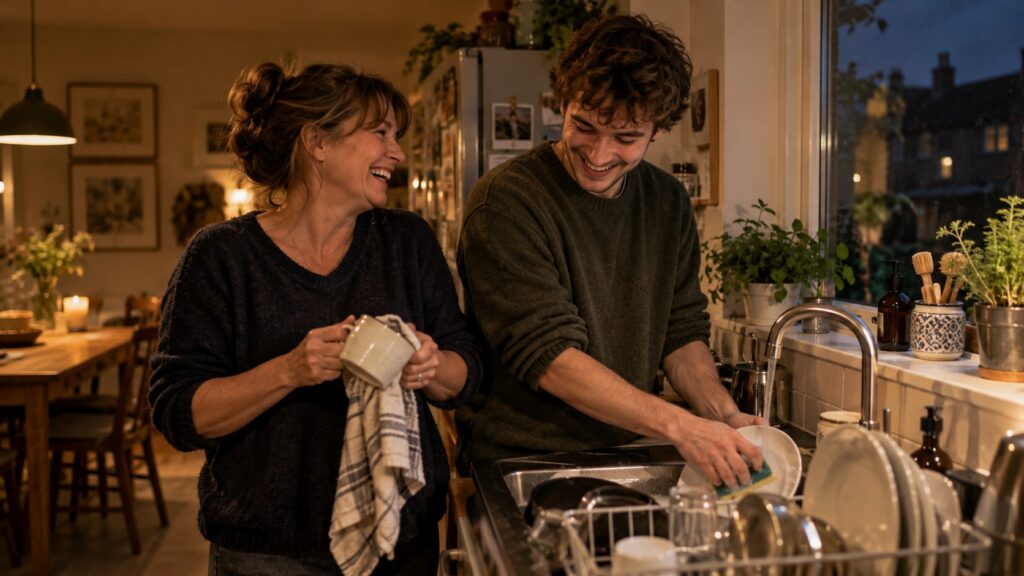
Progress itself doesn’t always unfold evenly across every area of life; someone may become highly independent around university while needing considerable structure around eating, for example. They may manage their routine confidently for months, then need more support during exams, or following a change in their mental health.
Research involving 256 parent/young adult pairs found that parents varied the type of help they provided according to how much autonomy they perceive their young adult to need or demonstrate.
“Good support is responsive. It creates room when someone is ready, and moves closer again when circumstances change.”
A place to practise independence

Here at Lions Campus, young people build independence with appropriate support embedded around them. That support can take many forms:
- Our programmes can include residential or structured day support, group work, one-to-one support, coaching and case management, practical life skills and community.
- Where appropriate, a young person’s education can continue – through school, sixth form, university or another provider – with bespoke educational assistance available through Lionheart Education.
- Clinical support can be equally individualised. We help coordinate the right external psychiatrists, therapists and specialists around a young person when a team is not yet in place, or we can slot right in alongside an existing professional support network.
What matters is how the pieces all fit together. Each individual is unique, and progress is not linear; the balance will look different for everyone. The point is that support develops and evolves alongside them.
Does a young person in your life need structure while building independence?
Talk to our team about how we can help.
Making room for what comes next
Ultimately, growing independence means more than being able to cook, travel, or keep a date in the diary. It’s also about developing your own sense of what matters: what can I realistically manage? When do I need help? Who do I trust to ask? Where do I want my life to go from here?
Those answers will develop over time. Families and professionals may continue playing an important role along the way. As a parent, you may have become appointment organiser, school liaison, reminder system and transport planner – as well as still being mum or dad.
But as a young person begins to carry more of their own life, with appropriate support around them, there is space for your relationship with them to evolve, too. The hope is that more of your energy can return to the relationship itself, rather than being occupied by managing the logistics and commitments around it.
“Progress can change the role of the people around a young person, too.”
Stepping back doesn’t mean you become less important in a young person’s life. Sometimes, it means making room for them to become more important in their own.